
Add powder escape holes
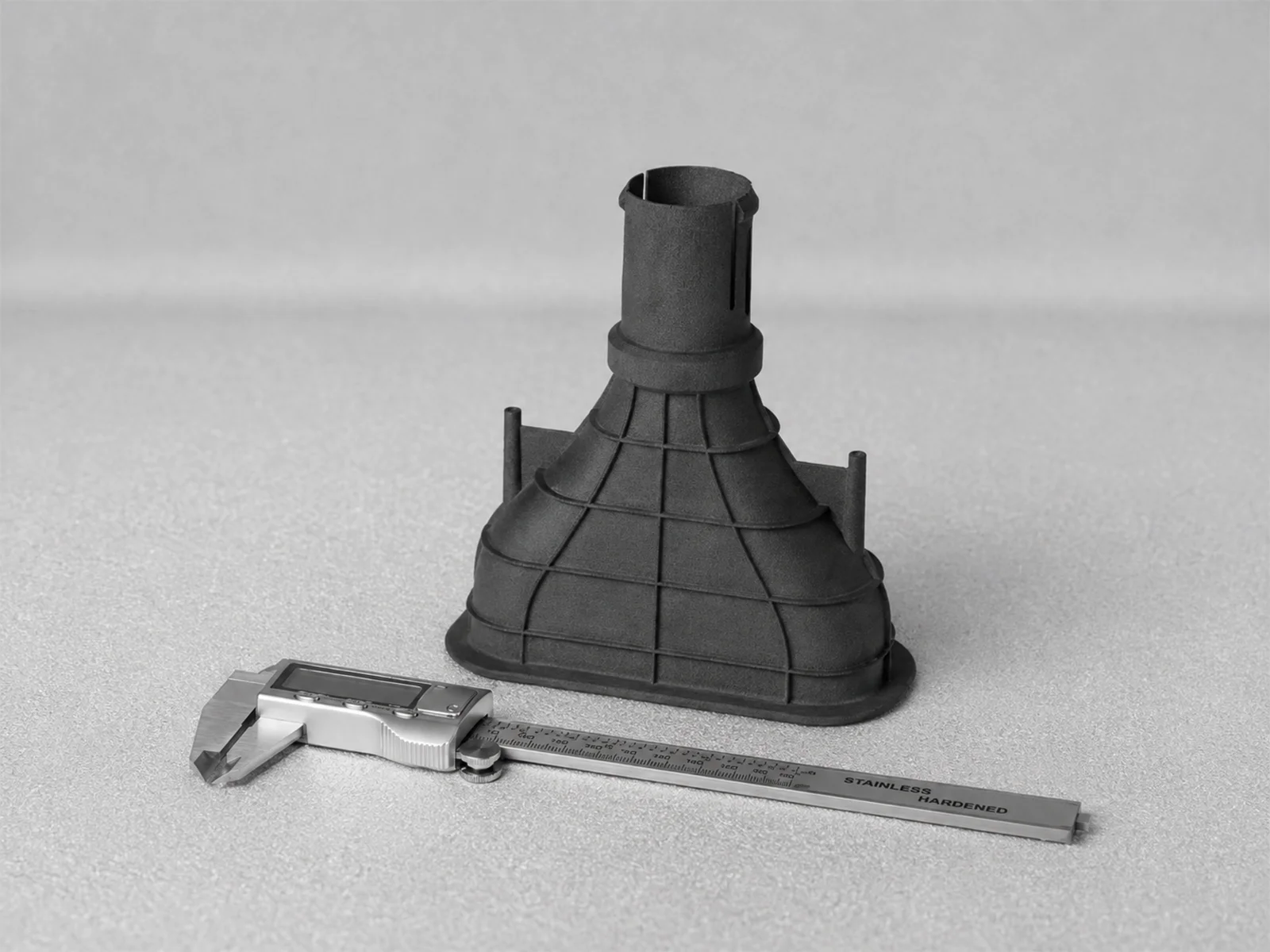
Use at least two 3–5 mm openings in enclosed cavities so loose powder can be removed after printing.
SELECTIVE LASER SINTERING
Produce durable nylon parts without dedicated support structures. SLS is a practical choice for functional prototypes, complex assemblies and low-volume end-use components.
DESIGN GUIDE
These values are practical starting points for quotation and design review. Final tolerance, wall thickness and orientation depend on material, geometry and critical features.
Use at least two 3–5 mm openings in enclosed cavities so loose powder can be removed after printing.
Avoid broad thin planes where possible. Add ribs or curvature to improve stiffness and reduce cooling distortion.
Keep approximately 0.5 mm between print-in-place features so adjacent surfaces do not fuse together.
All SLS projects are quoted with a production lead time starting from 3 days.
SLS MATERIALS
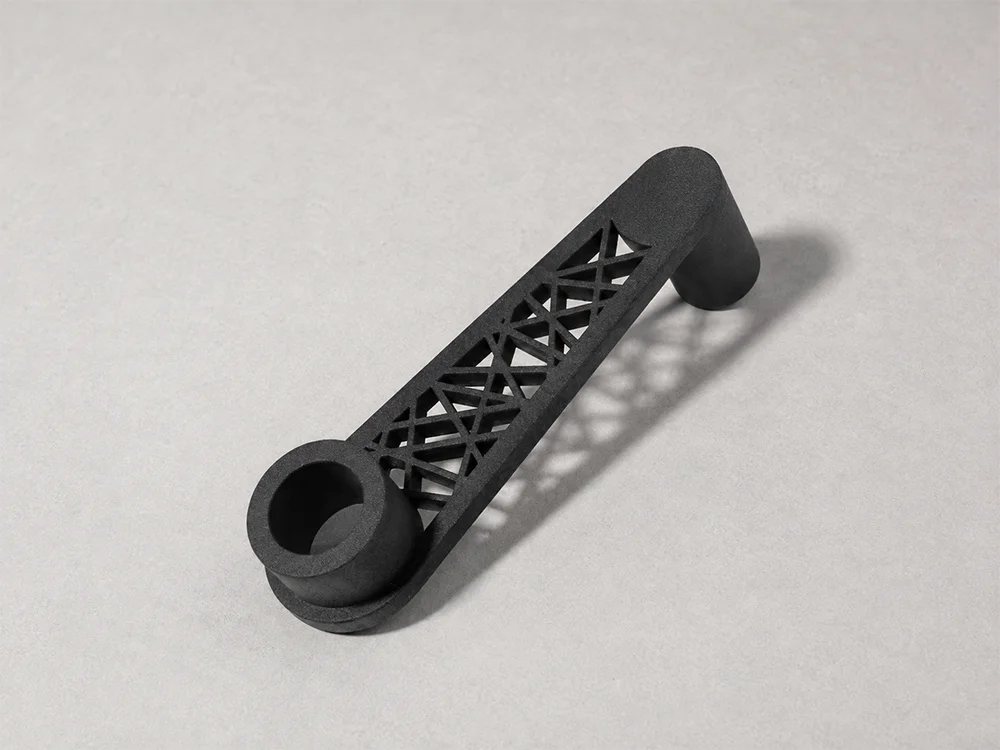
Balanced functional parts
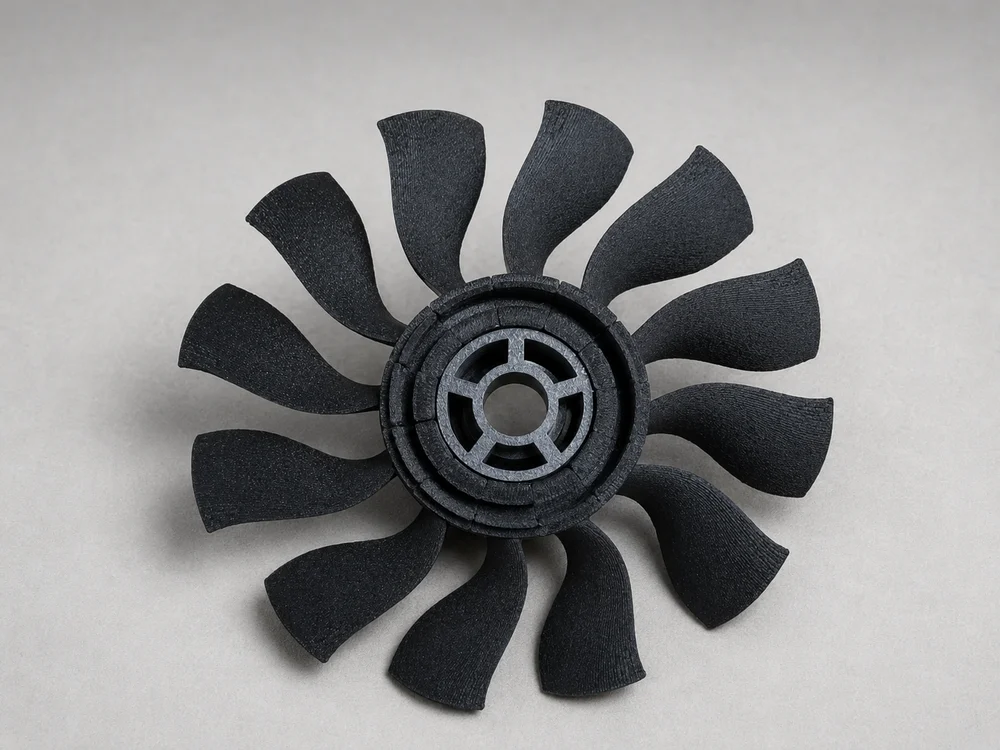
Impact and fatigue resistance
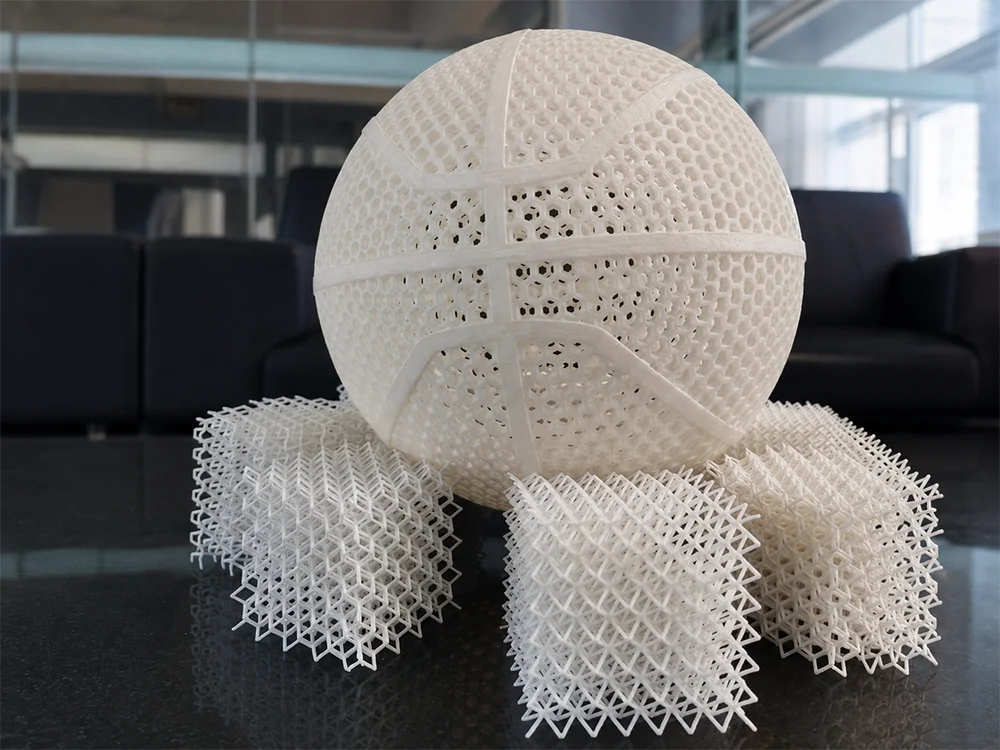
Flexible and wear-resistant parts
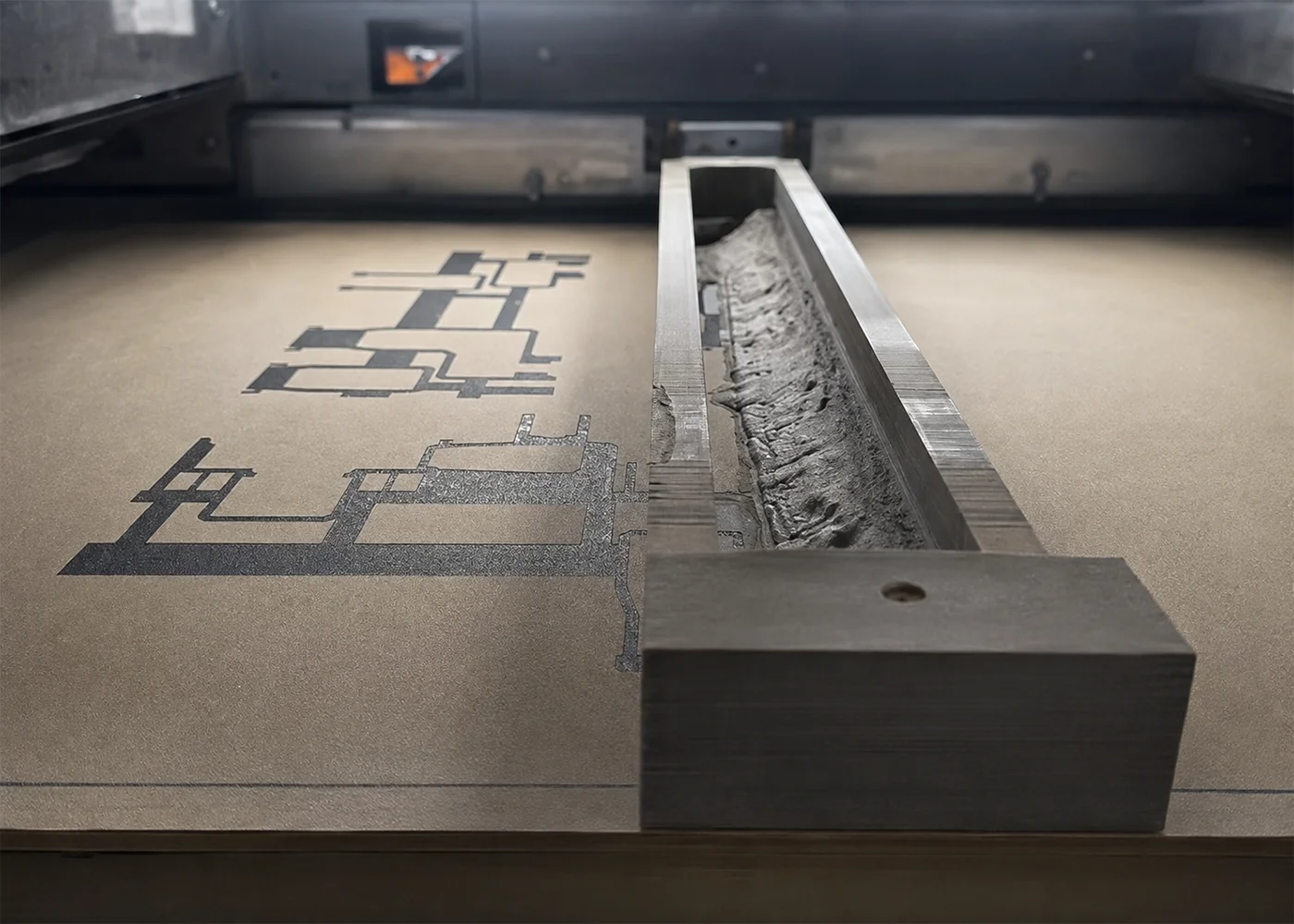
HOW SLS WORKS
Loose powder supports overhangs and internal features during the build.
Printed parts provide useful strength, toughness and chemical resistance.
Internal channels, lattices, nested parts and moving assemblies become practical.
Multiple parts can be nested together to use the available build volume effectively.
COMMON APPLICATIONS
Fit, form and load testing before production tooling.
Durable covers, ducts, clips and compact enclosures.
Lightweight manufacturing aids for assembly and inspection.
Snap fits, hinges and mechanisms printed as coordinated parts.