
5 Axis CNC Machining Services
5 Axis CNC Machining Services for Complex Precision Parts
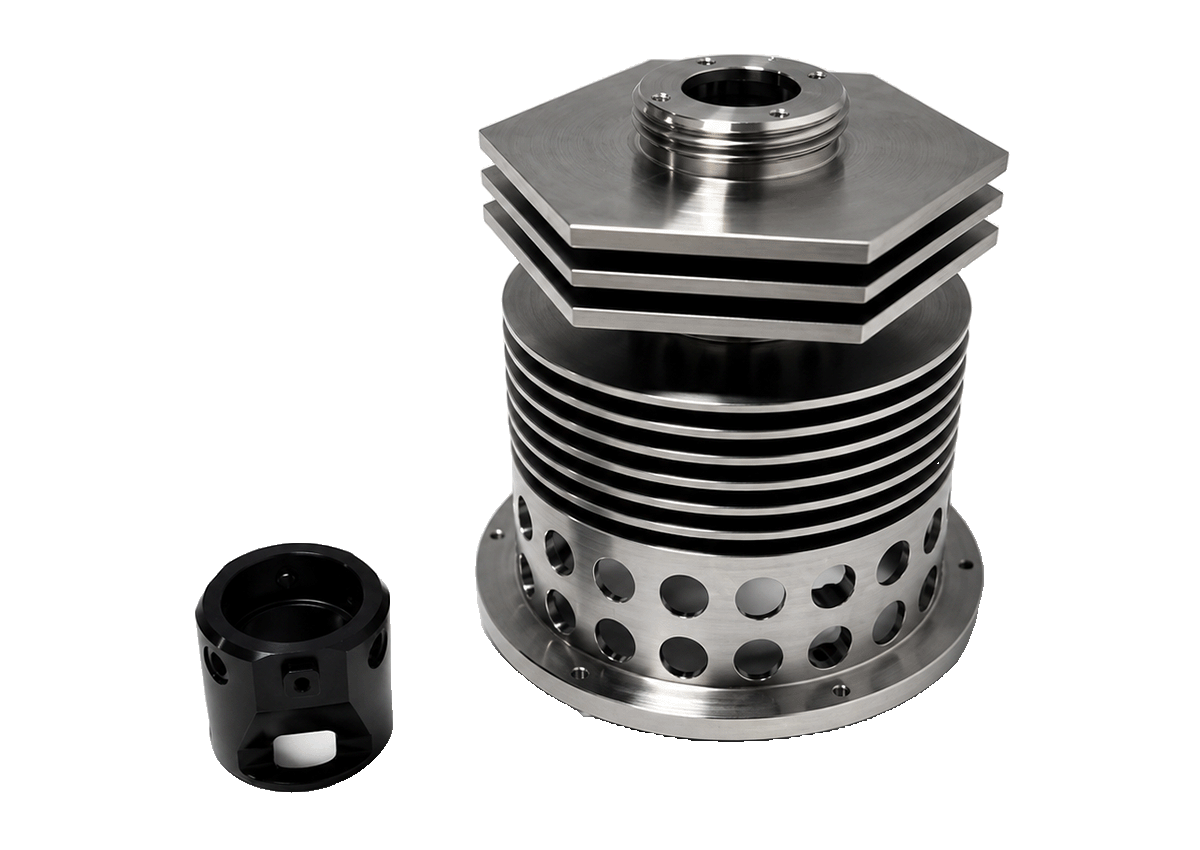
OUJI supports drawing-based 5 axis CNC machining for complex parts with multi-face features, angled holes, deep cavities, and critical positional relationships. Send your 2D drawings and 3D files for a practical manufacturability review, machining route suggestion, and fast quotation support.
Start Your 5 Axis CNC Quote
Send Drawings for 5 Axis Project Review
Share your 2D drawings or 3D files for geometry review, machining feasibility, material selection, tolerance evaluation, finishing options, and quotation support.
Files are handled confidentially.
Upload Your DrawingOverview
Why 5 Axis CNC Machining for Complex Parts?
5 axis CNC machining is suitable when a part includes multiple machining faces, angled features, contoured surfaces, deep cavities, or tight relationships between features that are difficult to maintain through repeated manual repositioning.
Compared with conventional multi-setup machining, 5 axis machining can help reduce re-clamping, improve tool access, support complex geometry, and maintain more stable positional relationships for precision custom parts.
Applications
Ideal for Geometrically Demanding CNC Parts
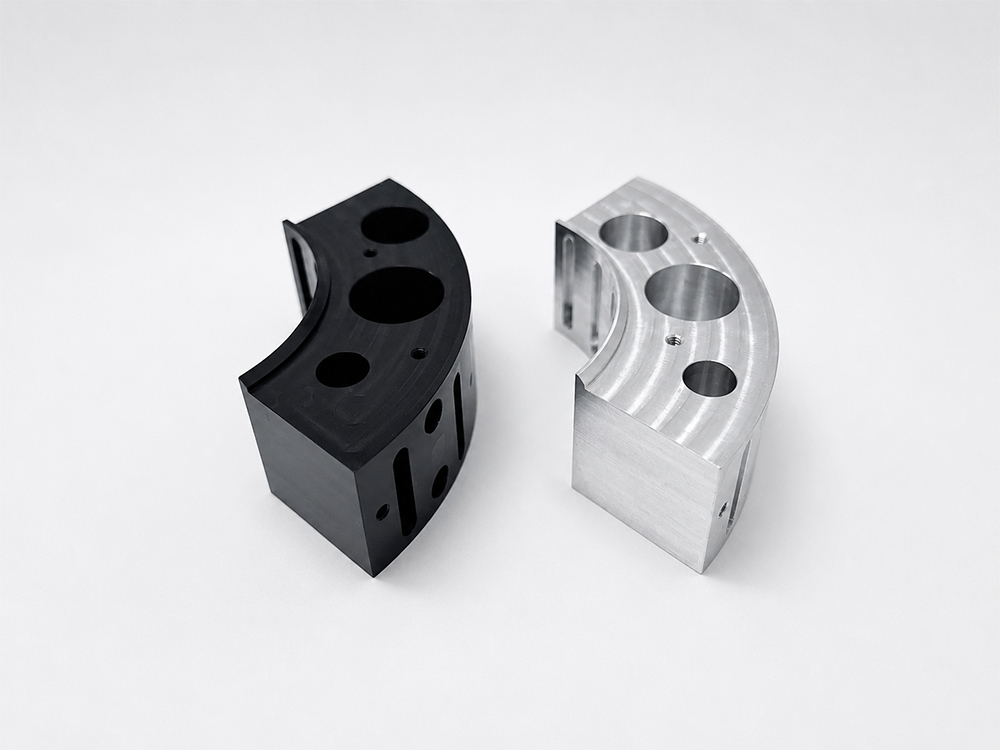
5 axis CNC machining is most valuable when part geometry, access direction, tolerance relationships, or setup control directly affects manufacturing stability.
Multi-Side Parts
Components requiring machining on several faces while maintaining controlled relationships between holes, shoulders, pockets, and reference surfaces.
Angled Features
Suitable for inclined holes, angled slots, compound surfaces, non-orthogonal faces, and features that do not align with standard vertical machining directions.
Complex Cavities
Useful for deep pockets, internal features, difficult tool access, and complex part structures that require machining from multiple directions.
Precision Assemblies
Supports custom parts where multiple functional features must align accurately during final assembly, testing, or equipment installation.
Capabilities
5 Axis CNC Machining Capabilities
We support drawing-based 5 axis machining for complex custom parts, prototypes, pilot runs, and low-volume production projects that require practical manufacturing review and reliable process coordination.
Typical 5 Axis Machining Scope
| Capability Area | Typical Support | Project Review Focus |
|---|---|---|
| Multi-face machining | Machining on multiple sides with fewer setup transitions | Datum strategy, clamping, feature relationship |
| Angled holes & features | Inclined holes, slots, chamfers, and angled surfaces | Tool access, depth, wall thickness, burr control |
| Complex cavities | Deep pockets, internal geometry, and difficult-access areas | Tool reach, corner radius, material rigidity |
| Contoured surfaces | Blended curves, flowing surfaces, and sculpted profiles | Surface quality, toolpath strategy, finishing allowance |
| Prototype & low-volume | Sample parts, pilot runs, and small batch production | Cost, lead time, stability, inspection requirements |
Actual capability depends on part size, material, geometry, fixture access, tool reach, tolerance requirements, surface finish, and inspection method.
Materials & Finishing
Materials and Post-Processing Options
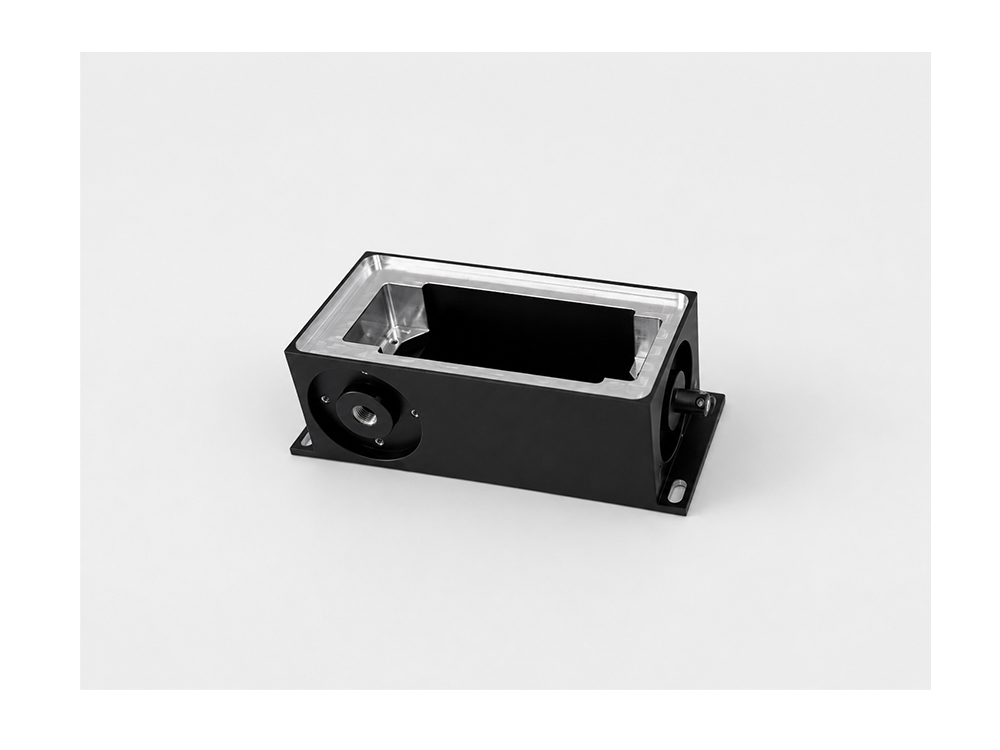
We support 5 axis CNC machining across common metals and engineering plastics. Material selection and post-processing are reviewed based on part function, geometry, tolerance requirements, surface finish, and application environment.
Metals
- Aluminum
- Stainless Steel
- Carbon Steel
- Tool Steel
- Brass / Copper
- Titanium
Engineering Plastics
- POM / Delrin
- PEEK
- PTFE
- Nylon
- ABS
- Other Plastics
Post-Processing
- Deburring
- Bead Blasting
- Anodizing
- Plating
- Heat Treatment
- Laser Marking
Manufacturing Route Review
When 5 Axis Machining Is the Right Choice
Not every part needs 5 axis machining. OUJI reviews geometry, quantity, tolerance requirements, material, access direction, finishing, and inspection needs before recommending a practical manufacturing route.
5 Axis Is Often a Better Fit For
- Parts with multiple machined faces
- Angled holes and inclined surfaces
- Complex cavities or difficult access areas
- Contoured profiles and blended geometry
- Critical feature relationships between different faces
- Projects that benefit from fewer setup transitions
A Simpler Setup May Still Be Suitable For
- Flat or open parts with simple geometry
- Components machined mainly from one direction
- Cost-driven parts with straightforward features
- Jobs where multiple setups do not affect critical dimensions
- Parts with limited tolerance or positional requirements
- Simple prototypes that do not require multi-axis access
Before Quotation
What We Check Before Quoting a 5 Axis Part
Before quoting a complex 5 axis CNC machined part, OUJI reviews the key manufacturing risks that may affect machining stability, cost, lead time, inspection method, and final part quality.
Datum Structure
We review datum strategy, critical references, and feature relationships to reduce setup risk and support stable inspection.
Tool Access
We check tool reach, deep pocket access, angled features, and possible collision risks before confirming a machining route.
Wall Thickness
Thin walls, long features, and weak structures are reviewed for rigidity, vibration, deformation, and clamping risk.
Corner Radius
Internal radius, tool size, surface finish, and machining allowance are checked to avoid unrealistic or costly machining requirements.
Material & Finishing
We review material behavior, heat treatment, anodizing, plating, and post-processing impact on tolerance and surface quality.
Inspection Method
Angled holes, mating faces, GD&T features, and critical dimensions are reviewed to determine practical inspection support.
Inspection & Documentation
Inspection Support for Critical 5 Axis Features
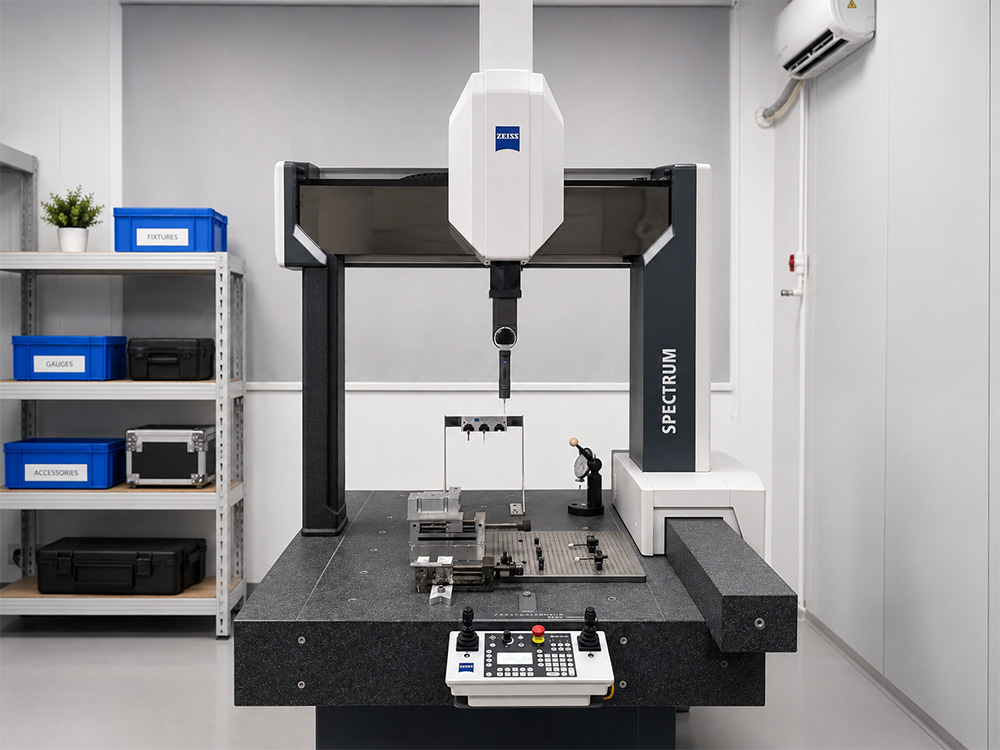
For complex 5 axis machined parts, inspection planning should focus on datum control, positional relationships, angled features, critical holes, mating surfaces, and dimensions that directly affect assembly or function.
FAQ
5 Axis CNC Machining FAQ
Common questions from overseas buyers about 5 axis machining, complex geometry, files, materials, tolerances, lead time, finishing, and inspection support.
When is 5 axis CNC machining better than 3 axis machining?
5 axis CNC machining is usually a better choice when a part includes multiple machining faces, angled features, contoured surfaces, deep cavities, or critical dimensional relationships that would otherwise require repeated repositioning.
Does 5 axis machining always reduce cost?
Not always. For simpler parts, 3 axis or conventional multi-setup machining may be more economical. For complex parts, 5 axis machining can reduce fixture complexity, setup transitions, and intermediate operations.
What types of parts are commonly made with 5 axis CNC machining?
Typical examples include complex housings, precision brackets, tooling components, automation parts, robotics parts, contoured components, and custom machined parts with multi-angle features.
Can you support prototypes and low-volume production?
Yes. OUJI supports prototype validation, pilot runs, and low-volume production for custom 5 axis CNC machined parts based on drawing requirements and project needs.
What files do you need for a 5 axis CNC machining quote?
A 2D drawing and 3D model are preferred. Please also provide quantity, material, tolerance notes, surface finish requirements, and any critical dimensions or inspection requirements.
Can finishing and inspection be included?
Yes. Depending on the project, OUJI can coordinate surface finishing, heat treatment, deburring, inspection support, and related documentation according to drawing and application requirements.
Need Review for a Complex CNC Part?
Send Your 5 Axis Machining Drawings for Review
We can evaluate geometry, machining route, material options, tolerance risks, finishing requirements, inspection needs, and quotation feasibility before production.